


Table of Contents
- What Makes Luxury Apparel Cost More
- How to Identify High Quality Clothing
- Cost Per Wear Calculation: Does Luxury Make Financial Sense
- How to Find Your Size Online and Ensure Proper Fit
- Intrinsic Value vs. Brand Markup
- Maintenance and Lifecycle Costs
- Frequently Asked Questions
Last Updated: October 2, 2026
What Makes Luxury Apparel Cost More
Understanding what drives luxury apparel costs is essential when deciding whether is luxury apparel worth the price. The difference between basic and premium shirts comes down to material sourcing, construction methods, and design expertise.
Material Composition and Sourcing
Premium garments use natural textiles like organic cotton, Tencel, linen, or wool blends rather than synthetics, requiring careful sourcing from quality-focused regions.
The Women's Tencel Wide-Leg Cuff Trousers blend 30% Tencel with cotton, bamboo fiber, and linen, creating breathability and drape that synthetics cannot match. Natural fiber sourcing complexity translates directly to higher prices, but performance and longevity differ dramatically from 100% polyester alternatives.
Craftsmanship and Construction Quality
Construction quality matters as much as materials. Luxury apparel features reinforced seams, finished hems, and details that mass production skips.
The Unisex Drop Shoulder Sweatshirt uses 13.6 oz. (460 gsm) premium cotton, nearly double fast-fashion weight. This requires specialized machinery and skilled operators, resulting in a garment that holds shape through dozens of washes while cheaper alternatives pill and fade after one season.

How to Identify High Quality Clothing
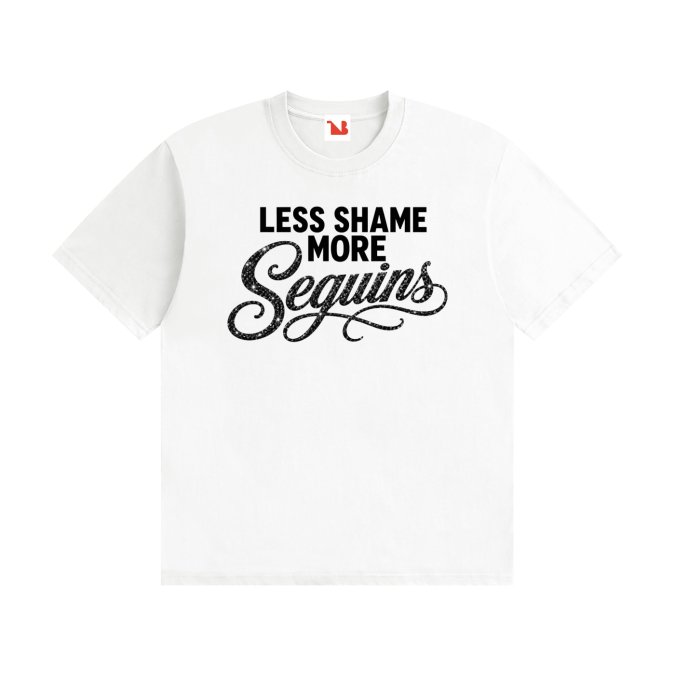
Smart shoppers evaluate high-quality clothing through measurable markers: fabric weight, fiber content, seam construction, and hardware quality.
Fabric Weight and Fiber Density
Fabric weight, measured in ounces per yard (oz/yd²) or grams per square meter (gsm), is the most reliable durability indicator, correlating directly to fiber density and wear resistance.
Fast-fashion: 4.5-5.5 oz/yd² (150-185 gsm) fabric pills and fades within 20-30 washes. Premium basics: 6-7 oz/yd² (200-235 gsm) maintains appearance through 50+ washes. Heavyweight luxury: 9-14 oz/yd² (300-470 gsm), like the Unisex Drop Shoulder Sweatshirt at 13.6 oz (460 gsm), softens with age and retains color through 100+ washes.
Find fabric weight on product specs.
Fiber Content and Natural vs. Synthetic Blends
Fiber composition determines initial feel and aging. Natural fibers and semi-synthetics behave fundamentally differently from pure synthetics.
Natural fibers (cotton, linen) improve with washing and allow skin to breathe. Semi-synthetics (Tencel, modal) balance breathability with durability; the Women's Tencel Wide-Leg Cuff Trousers exemplify this blend. Synthetics (polyester, acrylic, nylon) pill readily and degrade over time but are cheaper and easier to care for.
Check fiber content.
Seam Construction and Stitch Density
Seam quality directly predicts garment longevity.
Single-ply seams fail after 30-50 washes. Double-stitched seams (like the Heavyweight Straight Leg Denim Jeans) double failure threshold. Triple-stitched or bound seams prevent fraying and maximize stress distribution.
Inspect seams for smoothness, straight stitching, and no loose threads. Finished seams indicate investment in longevity.
Hardware and Closure Quality
Hardware (zippers, buttons, snaps) are critical failure points often overlooked.
Zippers: Coil zippers fail after 20-30 uses; metal zippers (YKK preferred) last 100+ uses. Buttons: Plastic cracks easily; bone, shell, or metal with reinforced thread lasts longer. Snaps: Quality branded snaps maintain tension through hundreds of cycles.
Cost Per Wear Calculation: Does Luxury Make Financial Sense
A garment lasting five years costs less per wear than one replaced after six months.
Breaking Down the Math
Divide price by total wears.
Wear frequency matters: statement pieces worn 20 times yearly have different cost-per-wear than staples worn multiple times weekly. The Belted Barrel-Leg Chino Pants function as a foundational piece.
Wardrobe Staples vs. Seasonal Trends
Wardrobe staples (basics, jeans, neutral trousers) justify luxury pricing through durability.
TNB-Shop-Store treats statement pieces as cultural artifacts. The DIVA IN PROGRESS collection is designed as conversation starters with artistic intention, meant for repeated wear based on conceptual value rather than fashion trends.
How to Find Your Size Online and Ensure Proper Fit
Fit determines value. Use detailed size guides and compare measurements to garments you own, not your typical size. Check fit notes and return policies before purchasing.
Intrinsic Value vs. Brand Markup
Some luxury brands charge premium prices for genuine quality; others charge for brand equity and perceived status.
Women's Quarter-Zip Boxy Hoodie | DIVA IN PROGRESS →
Intrinsic value comes from superior materials, reinforced seams, and design expertise.
TNB-Shop-Store, founded by industry veteran Quintin Humphrey (Giorgio Armani, Escada, Gap Inc.), charges prices reflecting genuine expertise and intentional design. The DIVA IN PROGRESS Heavyweight Drop Shoulder Sweatshirt costs more due to fabric weight (13.6 oz vs. 5-6 oz standard), design intention, and embedded storytelling, not marketing budget.

Evaluate luxury apparel by asking: Am I paying for better materials and construction, or am I paying for a brand name? If it's the latter, you're likely overpaying relative to the intrinsic value.
Maintenance and Lifecycle Costs
The true cost of ownership extends far beyond the purchase price. How you care for a garment, and what that care costs in time, money, and resources, determines whether the luxury investment actually delivers value. This is the hidden variable most shoppers ignore.
The Real Cost of Care: Time and Money
Premium fabrics often require gentler handling than mass-market alternatives. This isn't arbitrary; it's a direct consequence of using better materials.
Cold-water washing: Luxury pieces should be machine washed at 30°C (86°F) on a gentle or delicate cycle, not in hot water. The Heavyweight Straight Leg Denim Jeans and Tencel Wide-Leg Cuff Trousers both require this care. Hot water accelerates dye fading and weakens natural fibers. Cold-water washing costs nothing in money but requires intentionality, you must separate loads and run a dedicated cycle.

Detergent selection: Standard laundry detergent contains enzymes and brighteners that can damage premium fabrics.
Air-drying vs. machine drying: Tumble dryers damage natural fibers and accelerate wear.
Professional cleaning: Some luxury pieces benefit from occasional professional dry cleaning. A single dry-cleaning cycle costs $5-15 per garment.
Repair and Alteration Costs
Well-made garments can be repaired; cheap garments are typically discarded. This creates a cost divergence that favors luxury pieces over time.
Hem adjustments: A professional hem costs $10-30 depending on fabric complexity.
Seam repairs: A split seam on a luxury piece can be professionally repaired for $15-40.
Zipper replacement: A broken zipper on a luxury jacket can be replaced for $20-50.
Fabric care (stain removal, pilling): Luxury fabrics sometimes pill (small balls of fiber form on the surface).
The Maintenance Cost Framework
To accurately calculate whether a luxury piece is worth the price, include maintenance and repair costs in your total-cost-of-ownership calculation:
Example: Premium denim jeans
- Purchase price: $75
- Annual care costs: $5 (specialized detergent, occasional professional cleaning)
- Years of ownership: 5
- Anticipated repairs: 1 zipper replacement at $30
- Total cost of ownership: $75 + ($5 × 5) + $30 = $130
- Cost per wear (worn 2× weekly = 520 wears over 5 years): $0.25 per wear
Example: Fast-fashion denim jeans
- Purchase price: $35
- Annual care costs: $2 (standard detergent, machine drying)
- Years of ownership: 1.5 (typical lifespan before significant wear)
- Anticipated repairs: $0 (not economical to repair)
- Total cost of ownership: $35 + ($2 × 1.5) = $38
- Cost per wear (worn 2× weekly = 156 wears over 1.5 years): $0.24 per wear
Maintenance as a Lifestyle Filter
The real question isn't whether maintenance costs are high, they're usually modest. The question is whether you're willing to do the maintenance.
If you're someone who throws everything in a hot wash and dryer, luxury pieces will disappoint. The garment will deteriorate faster, and repairs will become necessary sooner.
Conversely, if you're willing to care for garments properly, luxury pieces reward that investment with years of wearability and improved appearance over time.
Frequently Asked Questions
What justifies the high price of luxury apparel?
Luxury apparel costs more due to superior material sourcing, craftsmanship, and construction standards. Premium pieces use natural textiles like high-grade cotton and Tencel blends with substantial fabric weights (360+ gsm), reinforced seams, and detailed finishing. Founder expertise, like industry experience at Giorgio Armani and Escada, influences design quality. Additionally, intentional storytelling and cultural authenticity in collections add intrinsic value beyond manufacturing costs. The price reflects durability, design intention, and the artistry behind each piece.
How do you calculate cost per wear for luxury apparel?
Divide the garment's price by the number of times you'll wear it over its lifetime. For example, a $88 sweatshirt worn 100 times costs $0.88 per wear. Luxury basics and investment pieces typically justify their cost through high wear frequency and long lifespan. Track how often you actually reach for items in your wardrobe before purchasing to ensure the math works for your lifestyle.
How can you tell if a garment is high quality?
Examine fabric weight (premium pieces are 300+ gsm), material composition (natural textiles like cotton, Tencel, and linen), and construction details. Check seams for straight, tight stitching with no puckering. Look for reinforced stress points, quality hardware, and finished hems. Read care instructions, premium garments often specify gentle washing at 30°C. Feel the fabric hand; substantial weight indicates durability. Brands like TNB-Shop-Store document their construction specifications, making quality transparent. Pieces designed by industry veterans typically show superior attention to detail.
Should I invest in luxury basics or focus on statement pieces?
Both serve different purposes. Luxury basics, like premium denim at $75 or tailored trousers at $78, anchor your wardrobe and justify their cost through constant rotation and years of wear. Statement pieces, such as the DIVA IN PROGRESS sweatshirt at $88, add personality and cultural conversation to outfits while maintaining quality construction. The ideal approach combines foundational basics with intentional statement pieces that reflect your identity. This mix maximizes versatility while ensuring every piece earns its place through either frequency of wear or emotional resonance.