


Table of Contents
- How to Audit Your Current Closet Before You Buy Anything
- The Capsule Wardrobe 3-3-3 Rule, Explained for Real Life
- A Sustainable Fabric Guide: What to Look For on the Label
- Slow Fashion Brands for Basics: How to Spot One
- Building Your Sustainable Capsule Wardrobe in Modules
- Repair, Mending, and Keeping Your Sustainable Capsule Wardrobe Alive
- Frequently Asked Questions
Last Updated: September 21, 2026
How to Audit Your Current Closet Before You Buy Anything
Learning how to build a sustainable capsule wardrobe starts with the closet you already own, not a shopping cart. This guide from TNB-Shop-Store treats your existing clothes as the raw material for a smaller, sharper, more intentional wardrobe.
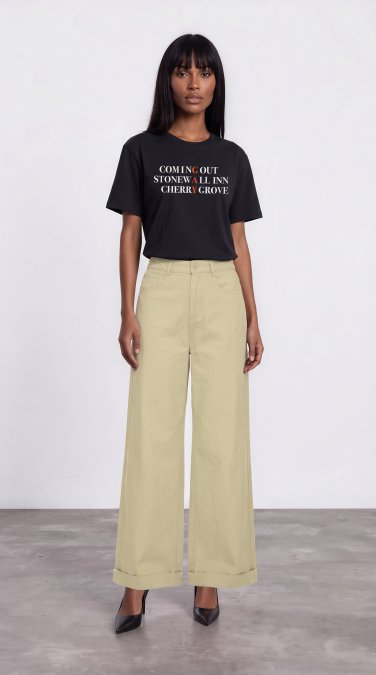
The Three-Pile Sort: Keep, Repair, Release
Work through every item and place it in one of three piles:
- Keep: fits well, worn regularly, still in good condition
- Repair: good bones, but missing a button, torn seam, or loose hem
- Release: doesn't fit, never worn, or past saving
A common mistake is keeping "someday" clothes. If you haven't worn it in a year, it belongs in the release pile.
Calculate Your Cost-Per-Wear Before You Decide
Cost-per-wear is the purchase price divided by the number of times you actually wear the item.
A $30 top worn twice costs $15 per wear. A $78 pair of Tencel Wide-Leg Cuff Trousers worn once a week for a year costs about $1.50 per wear. That math changes everything about what "expensive" means.

The Capsule Wardrobe 3-3-3 Rule, Explained for Real Life
The 3-3-3 rule is a starting structure for a capsule wardrobe: three tops, three bottoms, and three pairs of shoes that all work together.
A Sustainable Fabric Guide: What to Look For on the Label
Most capsule wardrobe guides tell you to "buy quality" and stop there. A sustainable fabric guide has to go one level deeper: how was the fiber made, how long will it last, and what happens to it when you're done with it? Those three questions separate a garment that survives five years of wear from one that pills apart in six months.
Natural Cellulosic Fibers: Cotton, Linen, Hemp
- Cotton: The workhorse. Long-staple varieties (Pima, Supima, Egyptian) produce a smoother, stronger yarn that resists pilling far better than short-staple commodity cotton. Conventional cotton is water- and pesticide-intensive; organic cotton avoids synthetic pesticides but still requires significant water.
- Linen: Made from flax, which grows with far less water than cotton and needs minimal chemical input. Linen is strong, breathable, and gets softer with every wash, but it wrinkles, and low-quality linen can feel scratchy for the first several wears.
- Hemp: Similar agronomic profile to flax, with a naturally abrasion-resistant fiber. Hemp softens with wear and holds shape well, though it's often blended because pure hemp can feel coarse.
Regenerated Cellulosics: Tencel, Modal, Viscose
These are made by dissolving wood pulp and re-spinning it into fiber. The umbrella term is lyocell (Tencel is a brand name for one lyocell process).
- Lyocell/Tencel: Uses a closed-loop solvent process that recaptures most of the chemicals, making it one of the lower-impact regenerated fibers. It drapes well, breathes, and blends cleanly with cotton and linen.
- Modal: Usually made from beech pulp. Softer than standard viscose and more resistant to shrinkage, but the production process is less closed-loop than lyocell.
- Viscose/rayon: The oldest and cheapest regenerated cellulose. It can be made responsibly, but the generic supply chain is associated with heavy chemical use and deforestation risk. Treat unlabeled "viscose" as a question mark, not a red flag.
Animal Fibers: Wool and Silk
- Wool: Merino and other fine wools are naturally odor-resistant, temperature-regulating, and long-wearing. They need less frequent washing than cotton, which cuts the energy and water footprint of ownership. Look for non-mulesed certification if animal welfare matters to you.
- Silk: Strong for its weight and biodegradable, but delicate in the wash and expensive to replace. Best reserved for pieces you'll actually wear often.
Synthetics: Polyester, Nylon, Acrylic, Elastane
Synthetics are durable and cheap, but they shed microplastics with every wash, a documented contributor to microplastic pollution in waterways. They also don't biodegrade, and blended synthetics are difficult to recycle mechanically.
- Polyester: Strong and wrinkle-resistant, but holds odors and sheds fibers.
- Nylon: More abrasion-resistant than polyester; common in outerwear and activewear.
- Acrylic: A wool substitute that pills quickly and sheds heavily.
- Elastane (Spandex): Added in small percentages for stretch. Even 2% elastane makes a garment much harder to recycle, because the fiber can't easily be separated from the rest.
How to Read a Blend Label
A blend isn't automatically bad. The question is whether the blend serves longevity or just cost-cutting.
| Blend type | What it usually means | Longevity signal |
|---|---|---|
| Cotton + linen | Breathable, structured, ages well | Strong |
| Cotton + lyocell | Soft hand, good drape, moderate durability | Strong |
| Wool + nylon | Added abrasion resistance for socks, outerwear | Strong |
| Polyester + cotton | Cheap, wrinkle-resistant, pills over time | Weak |
| Acrylic + wool | Wool substitute, pills and sheds | Weak |
| Anything + elastane | Stretch, but blocks recycling | Depends on use |
Fiber Choice Is a Longevity Decision
Slow Fashion Brands for Basics: How to Spot One
Slow fashion brands for basics share a few signals: they publish material details, produce in smaller batches, and design pieces that outlast trends rather than chase them.
Building Your Sustainable Capsule Wardrobe in Modules
Most capsule wardrobe advice assumes a mild, four-season climate. That's a problem if you live somewhere with a real winter, a humid summer, or a shoulder season that swings 30 degrees in a day. Modules solve this because they let you build a core wardrobe and then swap in climate-specific layers instead of rebuilding the whole thing.
The Three Core Modules
- Base layer: tees, tanks, lightweight long-sleeves, and underlayers worn closest to the skin. These do the most washing, so prioritize fibers that hold up, long-staple cotton, linen, or lyocell.
- Mid layer: button-downs, sweaters, overshirts, and light knits. This is where texture and color variety live, and where you can afford to be more expressive.
- Outer layer: jackets, coats, and heavier pieces that handle weather and structure. Buy the best you can here, outerwear is worn hard and replaced rarely.
Each module should work with the others. A base-layer tee should layer under a mid-layer overshirt, which should layer under an outer coat without bulk fighting bulk.
Climate-Specific Modules
The generic three-module system is a starting point. Here's how to adapt it.
Tencel Wide-Leg Cuff Trousers →
Cold-winter climate (Northeast, Midwest, mountain West):
- Base: merino or thermal-weight long-sleeves, not thin cotton tees.
- Mid: heavyweight wool sweaters, flannel, quilted overshirts.
- Outer: a real parka or wool coat rated for below-freezing wind chills, plus a lighter transitional jacket for fall and spring.
- Add-ons: gloves, a scarf, a hat, and waterproof boots. These are part of the capsule, not accessories.
Hot-humid climate (Southeast, Gulf Coast):
- Base: loose linen and lyocell tees and tanks that breathe and dry fast.
- Mid: lightweight cotton or linen button-downs for sun protection and air-conditioned interiors.
- Outer: a single packable rain shell and one light layer for over-air-conditioned spaces.
- Skip: heavy wool, thick denim, and anything that traps moisture.
Mild, wet climate (Pacific Northwest):
- Base: mid-weight cotton and merino tees.
- Mid: flannel, light wool, and layering-friendly knits.
- Outer: a waterproof shell with a hood, plus a mid-weight insulated jacket for winter.
- Priority: water resistance over warmth.
Dry, variable climate (high desert, inland West):
- Base: breathable cotton and linen for hot days.
- Mid: light wool and overshirts for cool mornings and evenings.
- Outer: a wind-resistant jacket and a warm layer for winter nights.
- Priority: layering flexibility, because the temperature swing is the whole game.
How Many Items Per Module
There's no universal number, but a workable starting point is:
- Base: 8-12 pieces
- Mid: 6-10 pieces
- Outer: 2-4 pieces
- Shoes: 4-6 pairs across seasons
- Accessories: 5-8 pieces (belts, scarves, bags, hats)
The Swap Test
Repair, Mending, and Keeping Your Sustainable Capsule Wardrobe Alive
Repair is where most capsule wardrobes quietly fail. A capsule only stays sustainable if you maintain it, and mending is far cheaper than replacing.
| Problem | Fix | Why It Matters |
|---|---|---|
| Loose button | Hand-sew with matching thread | Prevents losing the garment to a small flaw |
| Torn seam | Whip stitch or tailor repair | Restores structure without replacement |
| Small hole | Darning or patch | Extends wear by months or years |
| Faded color | Cold wash, air dry | Slows future fading |
| Worn hem | Rehem at tailor | Keeps the silhouette sharp |
Frequently Asked Questions
What is the 3-3-3 rule for a capsule wardrobe?
The 3-3-3 rule breaks your capsule into three categories: three tops, three bottoms, and three pairs of shoes. It is a starting framework, not a strict cap. The point is to prove that nine well-chosen pieces can create dozens of outfits through mixing. Once you see how far nine pieces stretch, you can add modules without fear of overbuying.
How many items should be in a sustainable capsule wardrobe?
Most people land between 30 and 40 pieces per season, including shoes and outerwear. The exact number matters less than the ratio: every piece should pair with at least three others in the capsule. If a garment only works with one outfit, it is a statement piece, not a staple, and it belongs outside your core count.
How do you start a capsule wardrobe without buying new clothes?
Start with a closet audit. Pull everything out, sort into keep, repair, and release piles, then calculate cost-per-wear on the keep pile. You will usually find 15 to 20 pieces already doing the heavy lifting. Build your first capsule from those pieces alone, then add only what fills a genuine gap.
What is the difference between a minimalist wardrobe and a sustainable capsule wardrobe?
A minimalist wardrobe prioritizes fewer items. A sustainable capsule wardrobe prioritizes fewer, better items with a focus on fabric, longevity, and where they came from. You can own 25 pieces of fast-fashion polyester and be minimalist. You cannot call that sustainable. The distinction sits in material, construction, and how long each piece stays in rotation.
What are the best sustainable fabrics to look for when building a wardrobe?
Look for Tencel, linen, organic cotton, hemp, and bamboo blends. These fibers breathe, hold shape, and biodegrade more readily than synthetic alternatives. A blend like 30% Tencel, 25% cotton, 25% bamboo, and 20% linen gives you the drape of a refined trouser with the durability of natural fiber. Check the care label too: gentle wash cycles extend garment life.
How do I identify my personal style for a capsule wardrobe?
Track what you actually wear for two weeks. Note the pieces you reach for twice and the ones you avoid. Your real style lives in the repeat wears, not the aspirational purchases. Once you see the pattern, build your color palette around those pieces and let everything else go.
How do I maintain a sustainable capsule wardrobe over time?
Set a quarterly review. Check each piece for wear, repair what you can, and replace only what has genuinely reached end of life. Wash on gentle cycles, air dry when possible, and store knits folded rather than hung. A capsule maintained this way can run three to five years before needing real turnover.
What is cost-per-wear and why does it matter?
Cost-per-wear is the purchase price divided by how many times you wear the item. A $78 trouser worn 80 times costs $0.98 per wear. A $20 top worn twice costs $10 per wear. The cheaper garment is the more expensive one. Use this math before every purchase to separate real value from a low price tag.